
O do not tell the priest our plight,
For he would call it sin,
For we’ve been out in the woods all night,
A’ conjuring summer in.
I bring good news by word of mouth,
Good news for cattle and corn,
For now is the sun come out of the South,
With Oak, and Ash, and Thorn.
—-Rudyard. Kipling
May 1st May Day is called Beltane by the Celts. The day is halfway between the spring equinox and the summer solstice. If you think of the year as a wheel, then May Day is on the opposite side of the wheel from Halloween. And just as Halloween is a festival of death—the end of harvest, the winter half of the year, May Day is about the time of flowering and fertility—the summer half of the year in the northern hemisphere. The Celts believed that at Halloween and Beltane the veil between the worlds of “normal” reality and the world of fairies, ghosts and magic was at its thinnest.
May was named for Maia, the goddess of growth and increase. May is a merry month of trysts and secret assignations, but it was considered notoriously unlucky to marry during this month and to wear green (the fairies’ color) was to invite calamity.
Married in May and kirked in green
Both bride and bridegroom won’t long be seen.
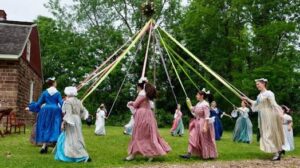
The chief symbol of May Day is the May pole. It represents the Green Man, the spirit of vegetation and fertility.
Come lasses and lads, get leave of your dads,
And away to the May pole hie,
For every he has got him a she,
And the fiddler’s standing by.
And Willie shall dance with Jane,
And Johnny his Joan,
To trip it, trip it, trip it, trip it, trip it up and down.
—Traditional song
The May pole is best described by my favorite culture critic Philip Stubbes in his 1583 Anatomy of Abuses: This May pole (this stinking idol rather) is covered all over with flowers and herbs, bound round about with strings from top to bottom, and sometimes painted with variable colours…Then fall they to leap and dance about it at the dedication of their idols, whereof this is the perfect pattern or the thing itself.
Our agrarian lives slowly shifted to industrial beginning in 1760. By 1886 May Day was designated as International Workers’ Day celebrating the working class. The holiday began to commemorate the Haymarket Affair in Chicago, where workers staged a general strike demanding an 8-hour work day. Today the labor class celebrates, marches and protests on May 1.
A different take on May 1, the Buddhists celebrate Versak, the birth, enlightenment and death of the Buddha. Buddhists go to temples, decorate their home altars and celebrate with flowers, lights and paper lanterns.
May 5 is Cinco de Mayo to celebrate Mexico’s victory over the Second French Empire. It celebrates Mexican-American culture with alcohol-fueled partying in the US. The Mexican Independence Day falls on September 16.
Don’t forget it’s Mother’s Day on May 10 this year.
May 12 is the feast day of Saint Pancras, who was martyred in the 4th century at the tender age of 14. He is the patron saint of children and invoked against headaches (because he was beheaded?) He is the middle saint in a trio of saints whose feast days often herald a late spring frost. They are called the Chilly Saints. He shares this moniker with St. Mamertus (May 11) and St. Servatius (May 13.)
May 12 is also the birthday of Florence Nightingale. Henry Wadsworth Longfellow wrote this tribute to her in 1867:
A Lady with a lamp shall stand,
In the great history of the land,
A noble type of good,
Heroic womanhood.
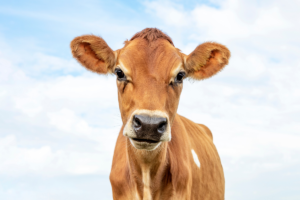
For those who are leery of vaccines, know that on May 14 in 1796, Edward Jenner vaccinated a boy for smallpox using the cowpox germs taken from a milkmaid’s hands. Word spread that those people who were vaccinated turned into cows.
The Belgians celebrate the feast day of Saint Dympna, patron saint of the insane, on May 15. Dympna was an Irish princess who fled her insane, incestuous father to Gheel, a small town just east of Antwerp. Her father found her there and brutally murdered her. The town of Gheel has become a mental hospital without walls. For centuries, relatives and friends have been bringing their mentally ill to her shrine in Gheel. How or why, no one can say, but the afflicted are often healed after visiting her shrine. In 1880, Vincent Van Gogh’s father considered bringing his famous son there for the cure.
On May 27, Muslims celebrate Eid-al-Adha commemorating Ibrahim’s willingness to sacrifice his son at God’s command.
And now for the literary calendar.
t was miraculous. It was almost no trick at all, he saw, to turn vice into virtue and slander into truth, impotence into abstinence, arrogance into humility, plunder into philanthropy, thievery into honor, blasphemy into wisdom, brutality into patriotism, and sadism into justice. Anybody could do it; it took no brains at all. It merely required no character. Joseph Heller wrote this in his novel, Catch 22. He was born on May 1, 1923.
Niccolò Machiavelli, author of The Prince was born on May 3, 1469. He wrote: The first method of estimating the intelligence of a ruler is to look at the men he has around him.
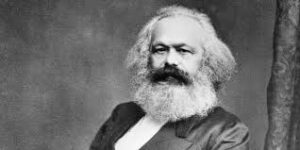
Philosophers Søren Kierkegaard and Karl Marx share a May 5 birthday. Marx wrote: Social progress can be measured by the social position of the female sex.
Sigmund Freud, born on May 6, wrote: Unexpressed emotions will never die. They are buried alive and will come forth later in uglier ways.
May 12 is Edward Lear’s birthday.

Ploffskin, Pluffskin, Pelican jee! We think no birds are as happy as we!
Plumpskin, Plashskin, Pelican jill! We think so then, and we think so still!
Daphne du Maurier, author of the fabulous gothic novel, Rebecca, was born on May 13, 1907.
Renowned author Katherine Anne Porter was born on May 15. She is best known for her novel, Pale Horse, Pale Rider. In addition to novels, she wrote poetry and short stories.
Omar Khayyam was born on May 18, 1048. This passage is from his famous Rubaiyat:
Oh threats of Hell and Hopes of Paradise!
One thing at least is certain— This Life flies;
One thing is certain and the rest is Lies—
The Flower that once has blown forever dies…
Nora Ephron, born on May19, began her career as an intern for John F. Kennedy. She is best known as a writer and director of romantic comedies, such as Heartburn, Sleepless in Seattle, You’ve Got Mail and Julie and Julia. She won an academy award for writing her original screenplay, When Harry Met Sally.
Born on May 2, 1688, Alexander Pope is the author of The Rape of the Lock. Written as an epic poem, Pope satirizes the English aristocracy.
Arthur Conan Doyle, creator of Sherlock Holmes, was born on May 22.
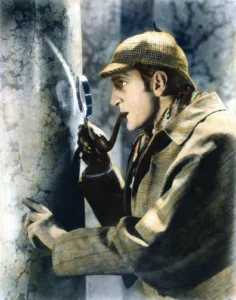
Pulitzer prize winning novelist Michael Chabon celebrates his birthday on May 24. His novels include The Amazing Adventures of Kavalier and Clay and The Yiddish Policeman’s Union. He shares his birthday with the great Irish writer, William Trevor, best known for The Story of Lucy Gault.
Another auspicious birthday falls on May 25 with the birth of the amazing poet Theodore Roethke, the short story writer and poet Raymond Carver and the Caribbean novelist and short story writer, Jamacia Kincaid.
Dashiell Hammett, pioneer of the noir genre, was born on May 27.
Irish writer Colm Tóibin was born on May 30. He is best known for his novel, Brooklyn.
Poet Walt Whitman, born on May 31, wrote: Happiness, not in another place, but this place, not in another hour, but this hour.
There are two full moons in May of 2026: The Full Flower Moon which rises on May 1, and the Blue Moon rising on May 31.
Flower Moon—How She Travels
by Mary Oliver
She moves only by night and on a south wind.
The wild ducks are her envoys.
Flying ahead,
Scouting the ponds, summoning
Turtles and dragonflies out of the beds
Of roots and mud.
he wagon she hauls with her
Is full of new leaves
Which she sprinkles over the trees as she passes, crying out
The words necessary to birth;
And small fish
She shakes into ditches and streams;
And once I saw her
Lift from her wagon the Flower Moon,
Round and full and milk-white
As a woman’s breast,
And she kissed it,
She sang to it,
She tossed it high above the trees, then gave
Another to the shining river.