
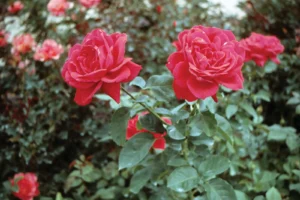
Roses of June, you most beautiful
With your sun-pierced hearts
June is named for Juno, the Roman Queen of Heaven, and the sister and wife of the sky god, Jupiter. Juno is a complex figure known as Juno Fortuna, goddess of fate; Juno Moneta, protector of funds; and Juno Caprotina, goddess of erotic love. For all her many aspects she is best known as Juno Pronuba and Juno Lucina, goddess of marriage and childbirth. Because of her patronage of marriage and family, June is a lucky month for marriages. That said, Juno’s quarrels with Jupiter populate the literature of the time. The male poets would have it that Juno was a jealous wife, but another take would be that their quarrels were the power struggle between the matriarchy and the patriarchy. Alas, we all know how that turned out.
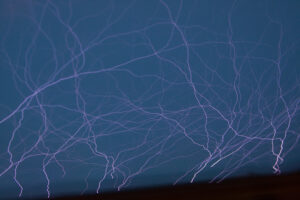
June 2 is the feast day of St. Elmo. He was a Syrian bishop martyred by having his intestines drawn from his body with a windlass, so of course, he is the patron saint of gut ailments. Because a windlass was used, he is also the patron of sailors. St. Elmo’s fire is the corona discharge that flickers around a ship’s mast during thunder storms. It is considered good luck to witness the fire, especially if your guts are intact.
June 13 is the feast day of St. Antony of Padua, a biblical scholar and inspired preacher. It was said that a year after his death in 1232, the saint’s tongue was found, red and fresh in the saint’s otherwise desiccated body. The tongue is enshrined in a silver case in Padua where the saint died. He is invoked to find lost things.
St. Anthony, gentle, kind, and near
Help me find what’s lost appear
Guide my steps, my eyes, my way
Bring it back without delay.
It was said that angels danced for St. Vitus when he was imprisoned. His feast day is June 15. He is patron saint of dancers, actors and those suffering from epilepsy.
June 16 is Bloomsday. It celebrates Leopold Bloom, James Joyce’s protagonist in his famous novel Ulysses, a 768-page novel about a single day in Bloom’s life. Every year fans of Joyce celebrate this June 16 anniversary. I acknowledge the day knowing that I’ll never read that damn thing again.
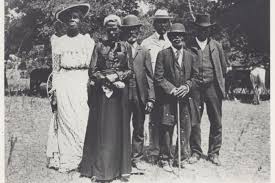
June 19 is Juneteenth. Although the Emancipation Proclamation was declared on January 1 1863, it didn’t become settled law in January 1865. There were many southern states that refused to enact the law. Texas was the final holdout until Major General Granger enforced the law on June 19, 1865.
In 1972, Richard Nixon made Father’s Day a national holiday. This year it falls on June 21. To all the good fathers out there—cheers!
June 21st is also the summer solstice, the longest day of the year. Although there’s an abundance of hot summer days to look forward to in the northern hemisphere, Midsummer, as the solstice is sometimes called, marks the waning half of the year. Before climate change bonfires were lit to celebrate the sun and to protect the health of all of us, plant and animal in northern Europe.
June 24 is St. John’s feast day.
Then doth the joyful feast of St. John the Baptist take his turn,
When bonfires great with lofty flame, in every town do burn;
And young men round maids, do dance in every street,
With garlands wrought of Motherwort, or else with Vervain sweet.
–Thomas Kirchmeyer (16 century)
This day honors St. John the Baptist and has been swept into the summer solstice fire celebrations in the northern hemisphere. St. John’s wort is used in many charms and spells of protection, mostly against fairies and devils.
St. John, as the Baptist, is the water bringer in Latin America and his feast day has become a water festival. People pack large picnics and head to the beach for a day of water and sun. Divinations are sometimes made by dropping a raw egg into a tumbler of water, much the same way fortunes are told reading tea leaves. If it rains on his festival, they say that San Juan llora, “Saint John cries.”
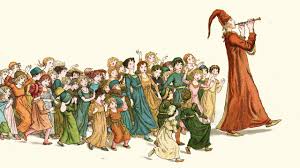
June 26 Pied Piper Day
In 1284, the German town of Hamelin was infested with rats, and everything the townspeople did to rid themselves of the vile creatures proved useless. But then, an eccentric stranger came to the town. He was dressed in multi-colored clothing looking like a court jester to the staid town folk and the burghers that ran the town. He assured the local burghers that he could rid them of the rats for a fee, which they readily agreed to. The man took a pipe from his pocket and played a mysterious tune that the rats found irresistible. They followed him into the swift river current and every last one was drowned. It seemed so easy for the Pied Piper that the burghers refused to pay him his fee.
Once again, the piper played a magical tune, this time luring all the children from their homes. They skipped and danced merrily behind the piper as he led them from the town. No parent was able to stop them. It was said a crack opened in the mountain face that closed behind the Pied Piper and all 130 children. The town of Hamelin stages Pied Piper plays every Sunday from June to September.
The story of the Pied Piper appears in children’s books to this day, but it is recorded history that 130 children actually went missing in Hamelin in 1284.
June 29th is St. Peter’s Day
St. Peter was a fisherman that Jesus Christ chose to head his church when he died. He is the patron saint of fishermen, celebrated in port towns throughout the Christian world.
The full Strawberry Moon rises on June 29.
From the literal heavens we turn to the literary heavens.
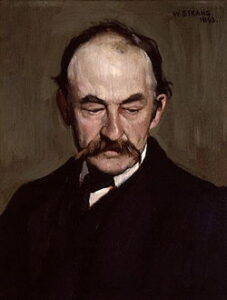
On June 2, 1840 Thomas Hardy was born. Author of Return of the Native, Tess of the d’Urbervilles and The Mayor of Casterbridge, Hardy wrote:
The value of old age depends upon the person who reaches it. To some men of early performance it is useless. To others, who are late to develop, it just enables them to finish the job.
And: Some folk want their luck buttered.
Marion Zimmer Bradley (The Mists of Avalon) shares her June 3 birthday with Larry McMurtry (Lonesome Dove and The Last Picture Show.)
Thomas Mann, author of The Magic Mountain and Death in Venice, wrote: A wrier is someone for whom writing is more difficult than it is for other people.
Two prize winning authors share a June 7 birthday: Louise Erdrich and Orhan Pamuk.
Patricia Cornwell, prolific mystery author, was born on June 9. Cornwall’s famous detective Kay Scarpetta was inspired by former Virginia Chief Medical Examiner, Marcella Farinelli Fierro.
Cornwall wrote: When I was at college there were two things I vowed I’d never do. One was go to a funeral and the other was deal with computers. And then I ended up being a computer programmer in a morgue.
Nobel prize winning author Saul Bellow was born on June 10. He wrote:
You can spend the entire second half of your life recovering from the mistakes of the first half.
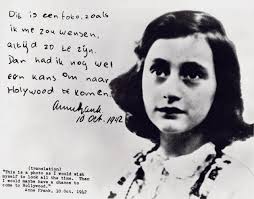
Anne Frank was born on June 12, 1929 in Frankfurt, Germany.
Yasunari Kawatbata, author of Snow Country and A Thousand Cranes and John Edgar Wideman author of Brothers and Keepers, God’s Gym: Stories, and Fever were both born on June 12. Kawabata wrote: As he caught his footing, his head fell back, and the Milky Way flowed down inside him with a roar.
Joyce Carol Oates was born on June 16. Her first novel was titled With Shuddering Fall. She has gone on to publish 57 more novels, not to mention short stories, plays and poetry. Her list of literary awards is nearly as long as her list of publications.
Amy Bloom, novelist and short story writer celebrates her birthday on June 18.
Two brilliant writers, Tobias Wolff and Salman Rushdie were born on June 19.
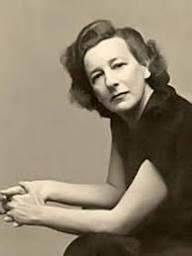
Lillian Hellman, author of The Children’s Hour, Little Foxes and Pentimento was born on June 20. She wrote: Old paint on a canvas, as it ages, sometimes becomes transparent. When that happens it is possible, in some pictures, to see the original lines: a tree will show through a woman’s dress, a child makes way for a dog, a large boat is no longer on an open sea. That is called pentimento because the painter “repented,” changed his mind. Perhaps it would be as well to say that the old conception, replaced by a later choice, is a way of seeing and then seeing again. That is all I mean about the people in this book. The paint has aged and I wanted to see what was there for me once, what is there for me now.
John Paul Sartre (No Exit, Being and Nothingness) and Ian McEwan (Amsterdam, Saturday and Atonement) are born on June 21. Sartre wrote: We are our choices, and Freedom is what we do with what has been done to us. McEwan said this about knowledge: No one knows anything, really. It’s all rented or borrowed.
Eric Arthur Blair, whose pen name was George Orwell was born on June 25, 1903. He’s best known for his books Nineteen Eighty-Four and Animal Farm. He wrote: The most effective way to destroy people is to deny and obliterate their own understanding of their history.
And: In a time of deceit telling the truth is a revolutionary act.
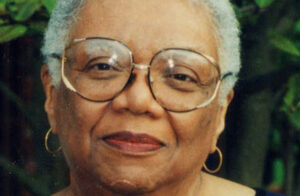
June 27 is the birthday of poet Lucille Clifton and novelist Alice McDermott (Charming Billy and That Night.
Antoine de Saint-Exupéry, was born on June 29. He is most famous for The Little Prince, a story about the young prince of a tiny asteroid who loves and leaves his vain and demanding rose.
I will close with the last verse of Rose, Irish poet Francis Ledwidge, born in 1887, dead thirty years later.
And loop this red rose in that hazel ring
That snares your little ear, for June is short
And we must joy in it and dance and sing,
And from her bounty draw her rosy worth.
Ay! Soon the swallows will be flying south
The wind wheel north to gather in the snow,
Even the roses spilt on youth’s red mouth
Will soon blow down the road all roses go.