

March
March is named for Mars the god of war. Mars is the father of the twins, Romulus and Remus, who founded the city of Rome.
Part winter, part spring, the British described March as March many-weathers. The month is especially known for its bluster. The first three days are dedicated to the Windy Saints on the 1st, 2nd and 3rd of March:
First comes David
Next comes Chad
Then comes Winnold, roaring mad.
Elia Peattie wrote in The Cup of the Sky that the wind was the oldest voice in the world.
March is also known for coming in like a lion, going out like a lamb. And sometimes the reverse, when the final days of the month are cold and stormy. Those last days of the month are said to be borrowed from April:
March borrowed from April
Three days, and they were ill
The first was snow and sleet
The next was cold and weet
The third was sic a freeze
The Birds’ nebs (beaks) stuck to trees.

Viewed on March 3rd, this year’s full moon is aptly called the Storm Moon.
March 15th, the Ides of March, got its ominous reputation from Shakespeare’s play, Julius Caesar. Romans called the 15th of every month the ides, and they were considered benign or sometimes festive the way we think of Wednesday as hump-day. At one time the Romans celebrated their new year on March 15th, and it was Julius Caesar that changed New Years to January 1st on his newly designed Julian calendar. Two years later, he was assassinated on March 15th.
The Irish celebrate the feast day of fifth century St. Patrick on March 17th. His emblem is the shamrock which he supposedly used to teach the pagans about the Holy Trinity. The only evidence we have that St Patrick existed is his autobiography, which didn’t surface until 400 years after his death. It’s unlikely that the Irish were converted as early as the fifth century as St. Bernard complained that the Irish were given to “barbarous rites” in the twelfth century. Instead, consider the shamrock god, Trefuilngid Tre-eochair, the son and consort of the Triple Goddess. The pagan shamrock represented the goddess’s—ahem—triple yoni.

St. Joseph’s Day is celebrated on March 19th. Children born on this day are said to be lucky. A clear St. Joseph’s Day forecasts a fine and fertile year. St. Joseph is the patron saint of carpenters, families and a good death. Husband of the Virgin Mary, Joseph was mocked as “The Divine Cuckold” in plays and paintings during the Middle Ages. People made charms burying his statue on its head or by taking the baby Jesus from him in creches. Renaissance mystics restored respect and admiration to this good man. Many people dedicate the month of March to honor St. Joseph by building altars, baking a special St. Joseph bread and by praying a novena to the saint.
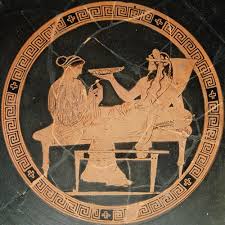
The Spring Equinox (equal day, equal night) falls on March 20th this year signaling the fruitful half of the year. In ancient times, it celebrated the return of Persephone to her mother, Demeter, goddess of the harvest. Persephone was abducted by Hades, god of the underworld. Demeter went into mourning, refusing to attend to her earth mother duties. Flowers withered, fruit died on the vine, and soon everyone was starving. At that point Zeus demanded that Hades return the girl. There was a hitch as there typically is. Because Persephone had eaten 6 pomegranate seeds during her stay with Hades, she had to return to the underworld and rein as Hades’ queen one month for each seed she consumed. Then Demeter resumes her mourning. Leaves fall off the trees, the fruit falls to the ground and the days grow cold until Persephone’s return.
My list of famous writers born in March begins with Dr. Seuss, Tom Wolfe and John Irving, all born on March 2nd. This from Irving’s A Prayer for Owen Meanie: Your memory is a monster: you forget—it doesn’t. It simply files things away. It keeps things from you—and summons them to your recall with will of its own. You think you have a memory; but it has you.
The Nobel prize writer, Gabriel García Márquez said this about memory: …always remember that the past was a lie, that memory has no return, that every spring gone by can never be recovered, and the wildest and most tenacious love was an ephemeral truth in the end. Márquez shares his March 6th birthday with Louisa May Alcott and Ring Lardner.
The wonderful non-fiction writer, John McPhee, shares his March 8th birthday with Jeffrey Eugenides.
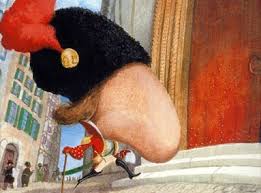
Born on March 19th, the brilliant Russian satirist, Nikolai Gogol, wrote short stories, novels and plays. Famous for The Overcoat and The Nose, Gogol’s masterwork Lost Souls led to his premature death. He saw the book as the Russian version of Dante’s Divine Comedy. The first book, Lost Souls, represented Dante’s Inferno. For the next ten years, Gogol worked on the second of The Divine Comedy trio, Purgatory. He descended into madness and starved himself to death at age 42.
Born on March 20th, 44BCE, Roman poet Ovid’s Metamorphoses is one of our primary sources of classical mythology. Once the darling of Roman society, the Emperor Augustus exiled Ovid to Tomes, in what is now Romania. When asked why he fell from grace, Ovid said it was due to a poem and a mistake. Scholars are still puzzling over what he meant.
Nobel prize author Peruvian Mario Vargas Llosa, wrote this: Memory is a snare, pure and simple; it alters, it subtly rearranges the past to fit the present. He was born on March 28th.
Emily Dickenson was a great fan of the month of March:
Dear March, come in!
How glad I am!
I looked for you before.
Put down your hat—
You must have walked
How out of breath you are!
Dear March, how are you?
And the rest?
Did you leave Nature well?
Oh, March, come right upstairs with me,
I have so much to tell!